Structured Cabling 101: Cat6, Cat6A and Fiber Explained
Cat6, Cat6A or fiber? A clear guide for Dubai facilities and IT managers on choosing the right structured cabling for speed, distance and future growth.
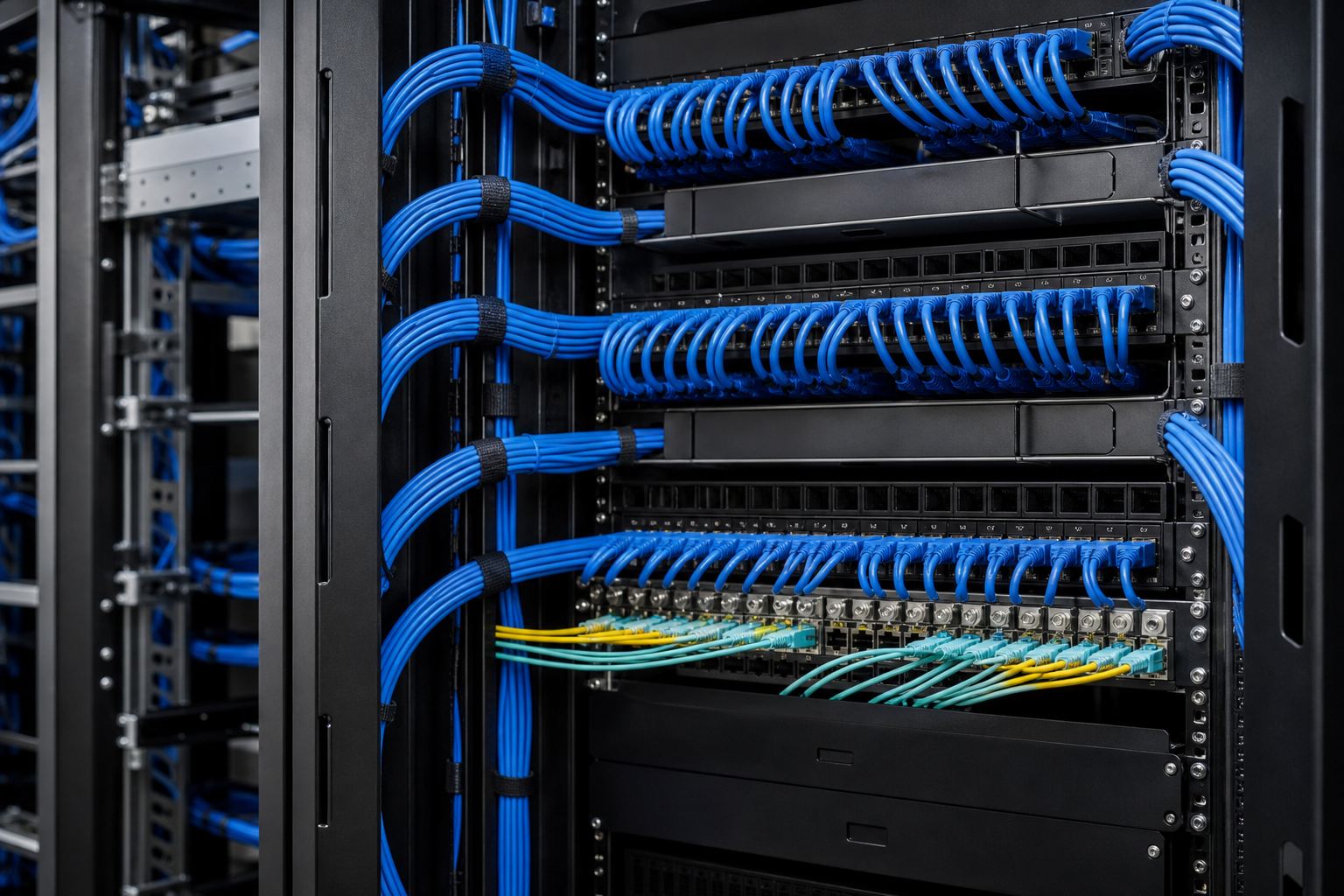
The short answer: choose Cat6 for cost-sensitive 1 Gigabit links, Cat6A when you want dependable 10 Gigabit and long-term headroom, and fiber for backbones, long runs and very high bandwidth. Most modern Dubai buildings use a mix of all three.
Structured cabling is the unseen foundation of every reliable network. Get it right and everything from CCTV to video conferencing simply works; get it wrong and you inherit years of intermittent faults. This guide explains the three most common media so facilities and IT managers can specify with confidence.
What "Structured Cabling" Actually Means
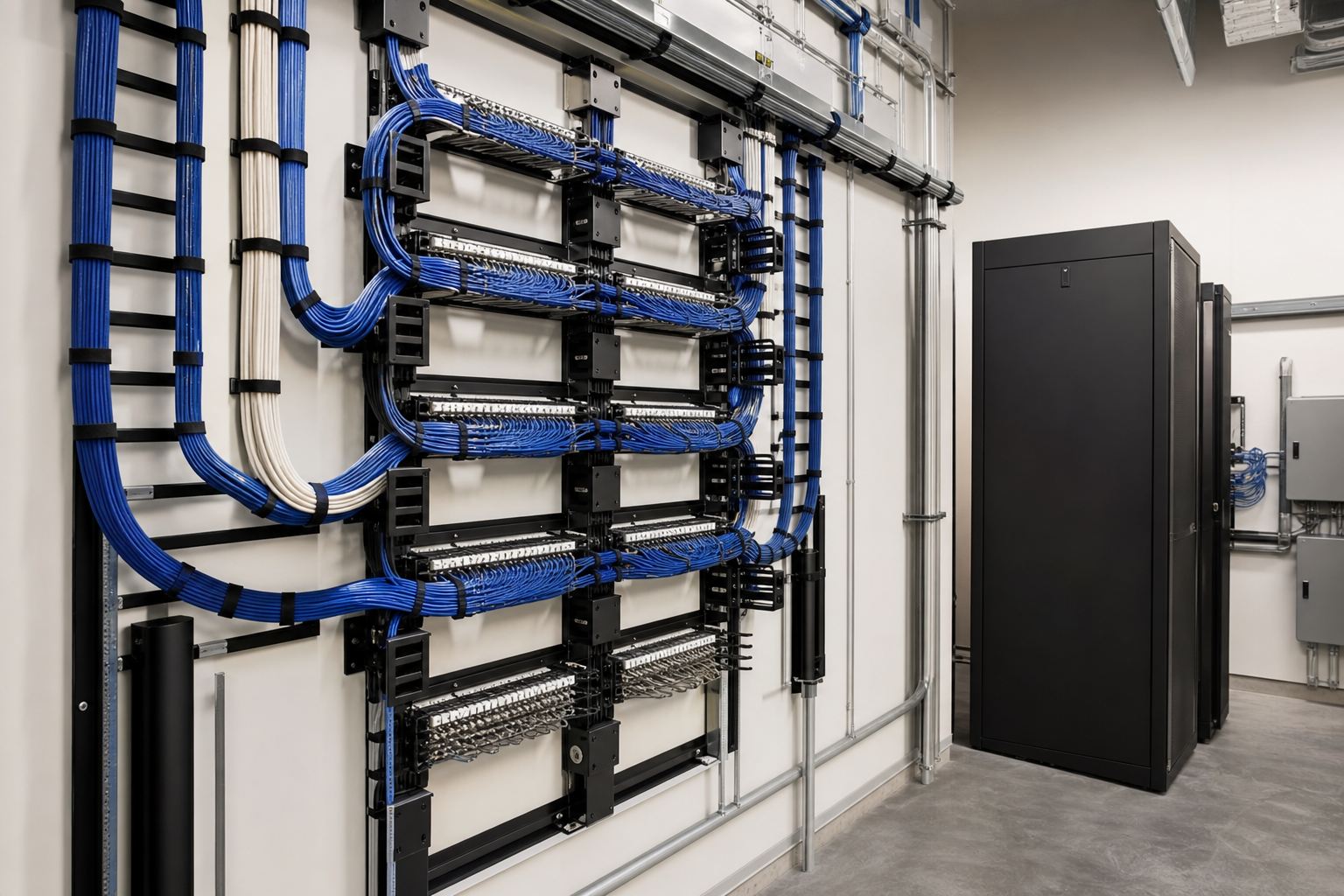
Structured cabling is a standardised, organised approach to the cabling that connects all the devices in a building, rather than a tangle of ad-hoc runs. It typically includes:
- Horizontal cabling — the copper runs from floor distributors to outlets at desks, cameras and access points.
- Backbone cabling — usually fiber, linking floors, risers and the main equipment room.
- Work area and patching — patch panels, faceplates and the cords that make moves, adds and changes easy.
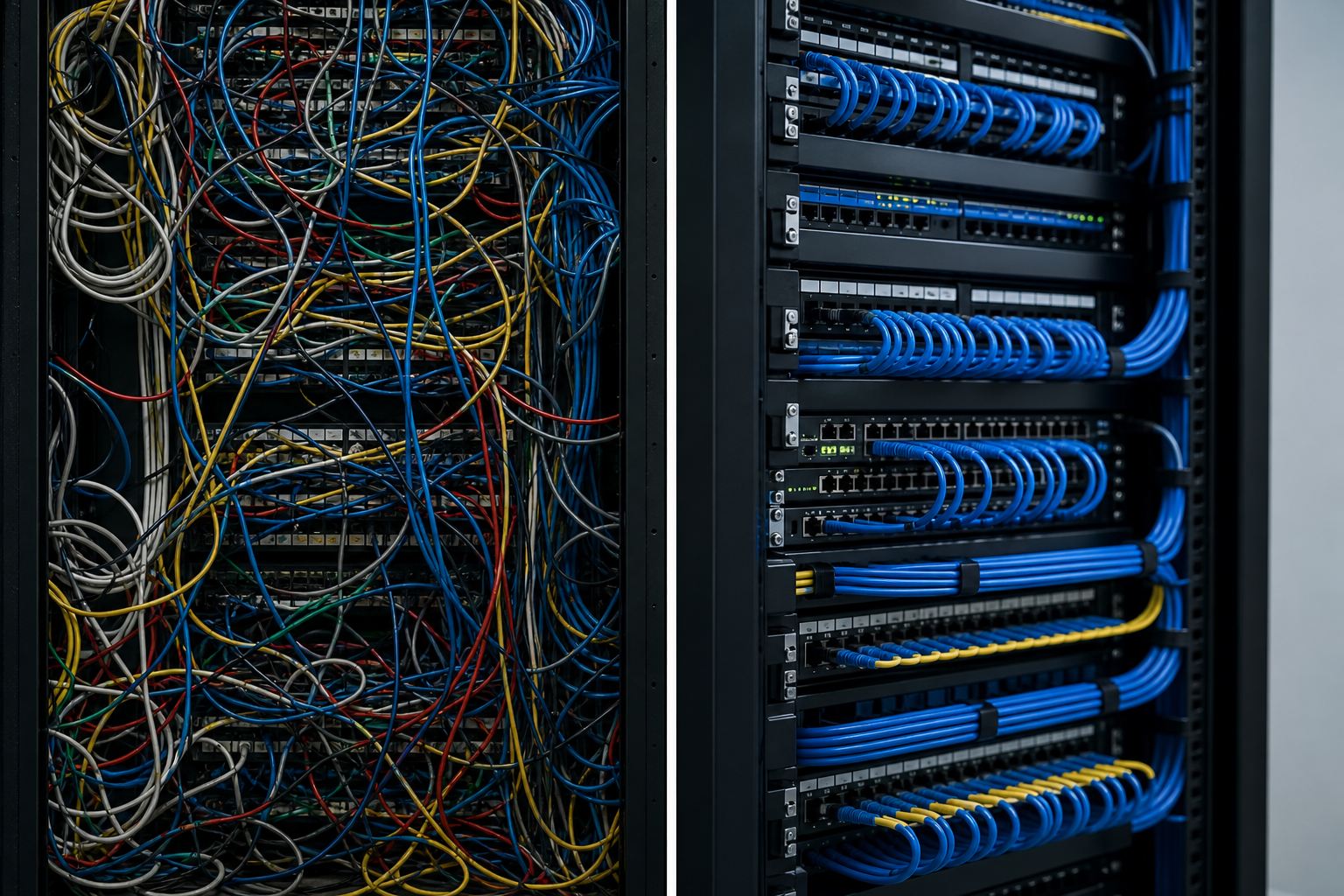
A structured design keeps everything documented and labelled, which dramatically reduces troubleshooting time later.
Cat6 vs Cat6A: The Copper Choice
Both are twisted-pair copper, but they differ in performance and physical build. Cat6A has tighter specifications and better shielding against crosstalk, allowing it to sustain 10 Gigabit speeds across a full 100-metre channel where Cat6 generally cannot.
| Feature | Cat6 | Cat6A |
|---|---|---|
| Typical max speed | 1 Gbps (10 Gbps only short runs) | 10 Gbps to 100 m |
| Bandwidth | Up to ~250 MHz | Up to ~500 MHz |
| Cable diameter | Thinner | Thicker, may need larger trays |
| Best for | Budget 1 Gbps offices | Future-ready 10 Gbps, dense PoE |
For a new fit-out you intend to keep for a decade, Cat6A is usually the smarter long-term decision. The cable and labour cost more, but re-pulling cable in an occupied building costs far more.
Where Fiber Fits
Fiber optic cable carries data as light, giving it three big advantages: enormous bandwidth, very long distances, and complete immunity to electrical interference. It is the natural choice for:
- Building backbones between floors and risers.
- Links to the data centre or main equipment room.
- Long external runs across a campus or between buildings.
Single-mode vs Multi-mode
- Multi-mode fiber is cost-effective for shorter, in-building backbones.
- Single-mode fiber suits long distances and the highest bandwidths, and is often specified where carriers such as DU or Etisalat terminate their services.
You rarely run fiber to every desk; instead, fiber forms the high-speed spine and copper handles the last leg to devices.
How to Choose for a Dubai Project
A few practical pointers for UAE commercial and residential developments:
- Match the medium to the run. Copper for sub-100-metre horizontal links; fiber for backbone and anything longer.
- Plan for PoE loads. Modern Cat6A supports the higher PoE classes that power pan-tilt-zoom cameras, displays and Wi-Fi 6/6E access points.
- Coordinate with service providers. Where DU or Etisalat deliver connectivity, confirm their termination and pathway requirements early so the riser and equipment room are ready.
- Mind the environment. Plenum-rated or appropriately fire-rated cable may be required in certain pathways; confirm with your consultant and authorities.
A quick comparison of typical use:
| Scenario | Recommended media |
|---|---|
| Desk and Wi-Fi outlets | Cat6A copper |
| Floor-to-floor backbone | Multi-mode or single-mode fiber |
| Carrier hand-off | Single-mode fiber |
| CCTV and access control | Cat6A with PoE |
The Real Cost Is in Getting It Wrong
The cable itself is rarely the largest line item; design, labour, containment and testing are. Skimping on the standard to save a little on cable often leads to early obsolescence and disruptive upgrades. A well-planned structured cabling system, certified and labelled on handover, pays back through years of stable, low-maintenance operation.
If you are weighing options for a new building or refurbishment, our team can assess your bandwidth, distances and growth plans and recommend the right blend of copper and fiber. Explore our services or browse our projects to see how we approach real installations.
Ready to specify cabling that will still serve you in a decade? Contact our team for a site assessment and a clear, vendor-neutral recommendation.
Frequently asked questions
Is Cat6A worth the extra cost over Cat6?+
For most new commercial fit-outs in the UAE, yes. Cat6A reliably supports 10 Gigabit over the full 100-metre channel and offers better headroom for future devices, which protects your investment for the life of the cabling.
Do I still need copper if I install fiber?+
Almost always. Fiber typically carries the backbone between floors and to the data centre, while copper (Cat6A) delivers data and Power over Ethernet to desks, cameras and access points. Most buildings use both.
How long does structured cabling last?+
A well-designed copper and fiber installation is usually expected to serve 10 to 15 years or more. Because re-cabling an occupied building is disruptive, it pays to specify a generous standard at the outset.
Can the same cabling power my CCTV and access points?+
Yes. Power over Ethernet (PoE) delivers both data and power over a single cable to cameras, access points and door controllers, which simplifies installation and reduces the need for nearby power outlets.