DU & Etisalat-Approved Cabling: What Developers Need to Know
A practical guide for UAE developers on DU and Etisalat-approved cabling: why approval matters, what inspectors check, and how to avoid handover delays.
The short answer: DU and Etisalat are the UAE's main telecom operators, and they require in-building telecom cabling and pathways to meet their published standards and be installed by approved contractors before they will connect and activate services. Planning for this from day one is the single best way to avoid handover delays.
For developers, "approved cabling" is not red tape for its own sake. It is the gateway to switching on voice, internet and IPTV for your tenants. This guide explains what matters and how to stay on schedule.
Why Operator Approval Exists
When a building connects to the public telecom network, the operator's service quality depends partly on the cabling inside your walls. To protect that, DU and Etisalat publish requirements covering the in-building network, the pathways that carry it, and the rooms that house equipment. They also maintain lists of approved contractors authorised to design and install to those standards.
The practical effect: even a perfectly functional cable installation can be rejected if it does not follow the serving operator's rules.
What the Operators Typically Look At
While exact requirements vary and are updated over time, inspections generally focus on a familiar set of items:
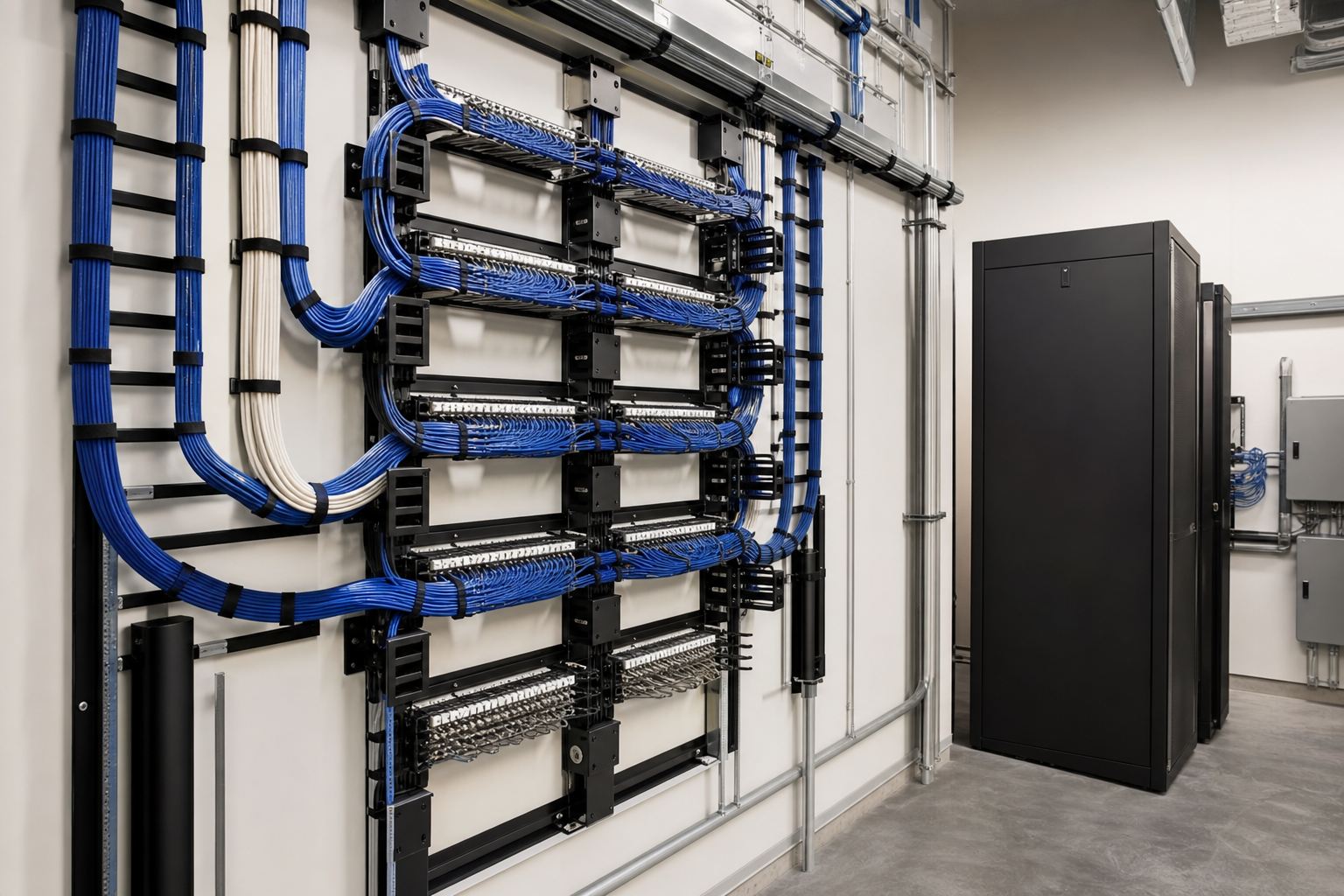
- Telecom pathways and risers — correctly sized, accessible and dedicated, with appropriate separation from power.
- Equipment and termination rooms — adequate space, ventilation, power and security for operator equipment.
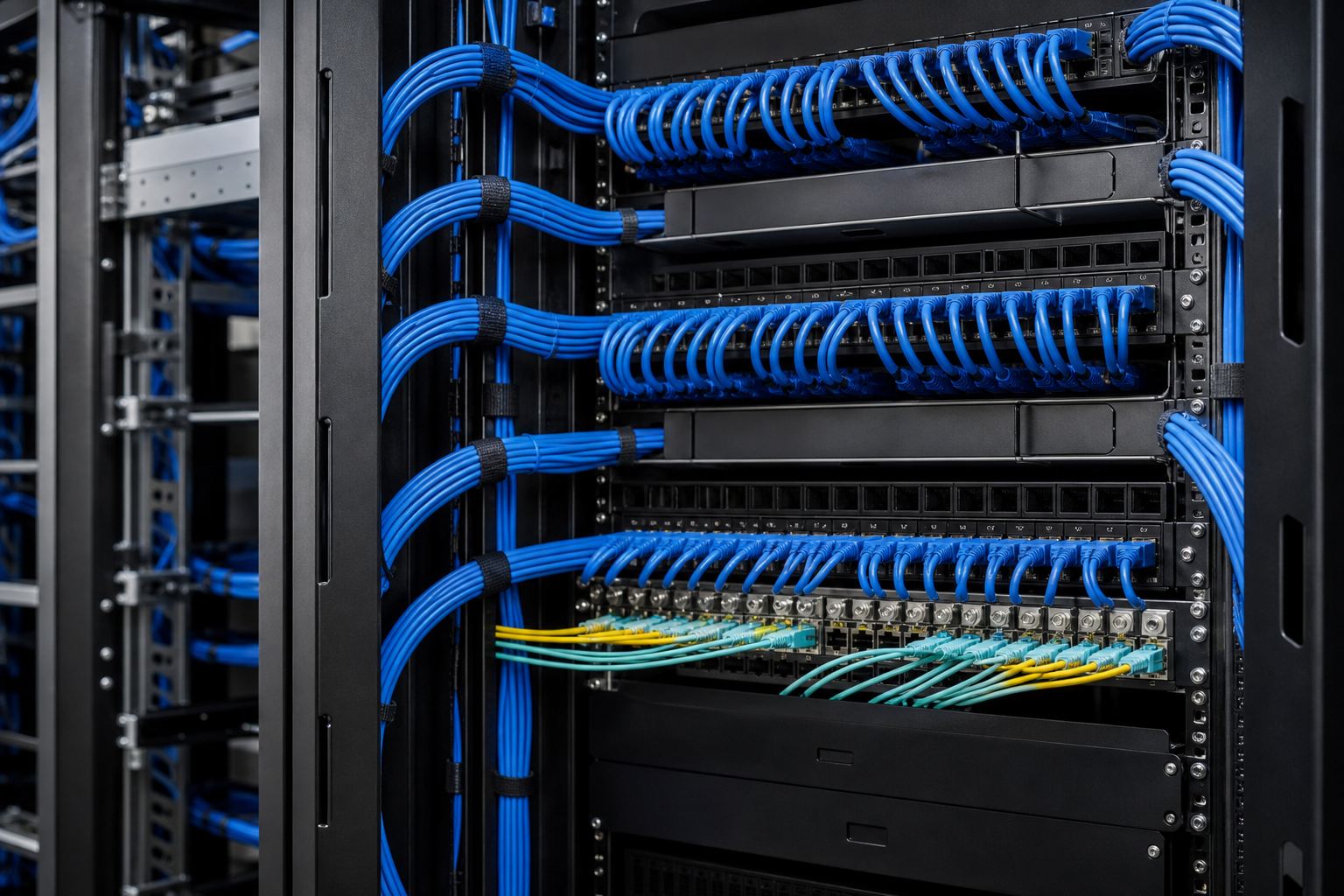
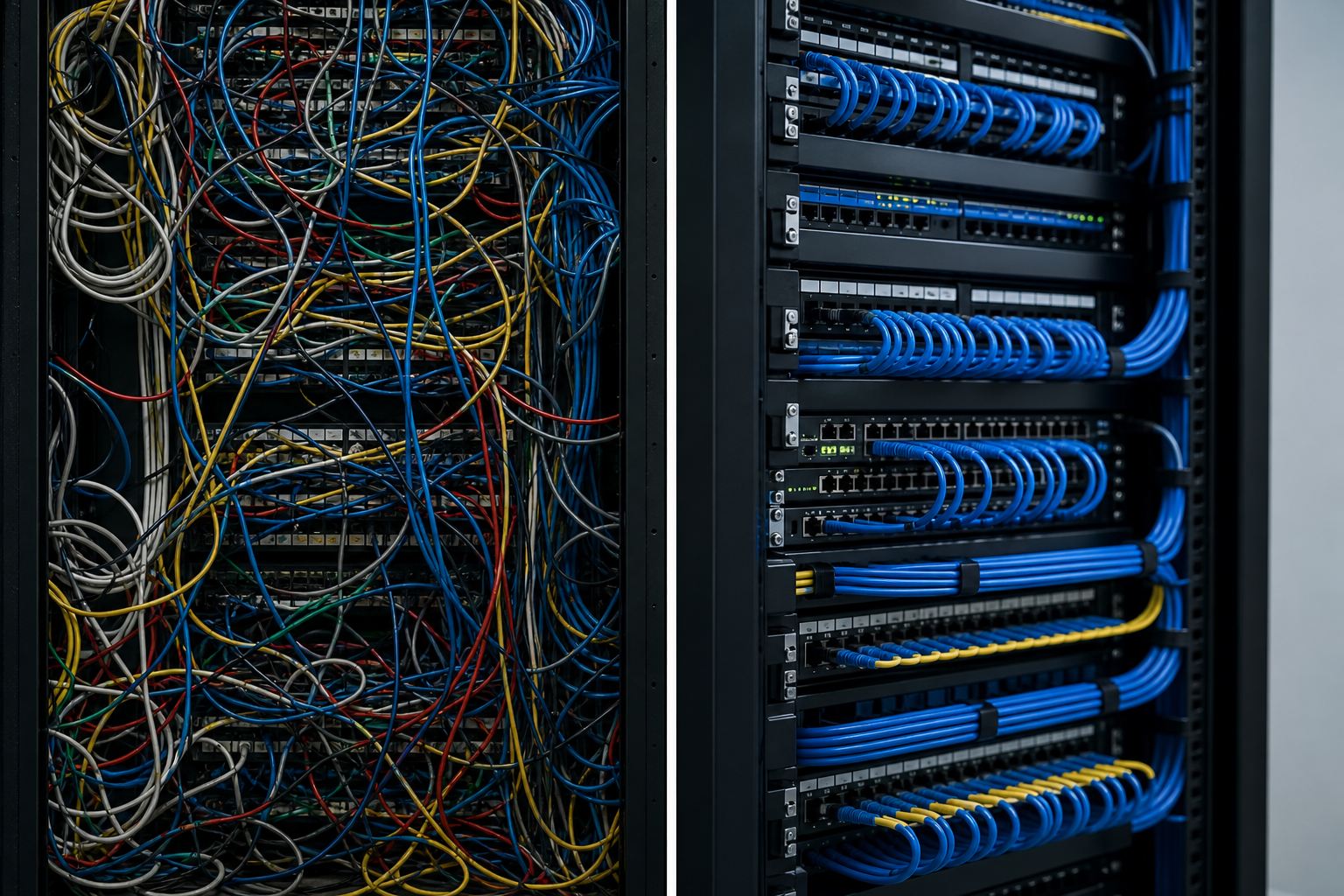
- Cabling type and termination — approved materials, neat terminations and proper labelling.
- Documentation — as-built drawings, schematics and test results presented in the expected format.
- Earthing and bonding — a safe, compliant grounding scheme.
Because the details change, always confirm the current standard with the serving operator or your approved contractor rather than relying on older project documents.
The Cost of Getting It Wrong
Most approval problems are not exotic; they are basic coordination failures discovered late:
| Common issue | Typical consequence |
|---|---|
| Riser or room undersized | Costly structural rework |
| Non-approved materials used | Re-cabling before activation |
| Missing or incorrect as-builts | Re-inspection and delay |
| Power and telecom not separated | Failed inspection |
| Contractor not on approved list | Work rejected outright |
Each of these can push out tenant move-in dates, and in a competitive Dubai leasing market, delays cost real money.
A Smooth Path to Approval
The developments that sail through approval tend to follow the same playbook.
1. Engage early
Bring an approved ELV contractor in at design stage. Pathways, riser dimensions and room locations are trivial to adjust on a drawing and expensive to change in concrete.
2. Confirm the serving operator
Different areas may be served by DU or Etisalat. Establish which one applies to your plot before finalising the telecom design, as their requirements differ in the details.
3. Build to the current standard
Use approved materials and termination practices throughout, and keep the equipment rooms to specification for space, power and cooling.
4. Document as you go
Maintain accurate as-built drawings and complete certified test results. Clean, complete documentation is often the difference between a first-time pass and a re-inspection.
5. Coordinate the inspection
Let your contractor manage the submission and inspection so issues are caught internally before the operator ever visits.
Where an ELV Partner Adds Value
A contractor who works regularly with both operators does more than pull cable. They translate the operators' requirements into a buildable design, keep your documentation in the right format, and manage the back-and-forth so your team can focus on the wider project. That coordination is exactly where avoidable delays disappear. See how we support developers across our services, or review our projects for examples of delivered work.
If you are planning a new development and want telecom approval handled without drama, contact our team early. Getting the pathways and paperwork right from the start is the cheapest insurance you can buy against a delayed handover.
Frequently asked questions
Why do DU and Etisalat need to approve building cabling?+
Because these operators deliver telecom services into the building, the in-building pathways and cabling must meet their standards before they will connect and activate services. Approval protects service quality and ensures their network terminates safely.
When should I engage an approved contractor?+
As early as possible, ideally at the design stage. Pathways, riser sizes and equipment room locations are far cheaper to get right on paper than to rework after construction has started.
What happens if cabling is not approved?+
The operator may withhold service activation until defects are corrected. This commonly causes handover delays, re-inspection fees and rework, all of which are avoidable with early planning.
Can one contractor handle both DU and Etisalat requirements?+
Yes. An experienced ELV contractor familiar with both operators can design pathways and documentation that satisfy whichever provider serves your area, and coordinate the inspection process on your behalf.