
Wireless vs Wired Access Control: Pros, Cons & Costs
Wireless or wired access control? Compare installation cost, reliability, security and scalability to choose the right option for your UAE building.
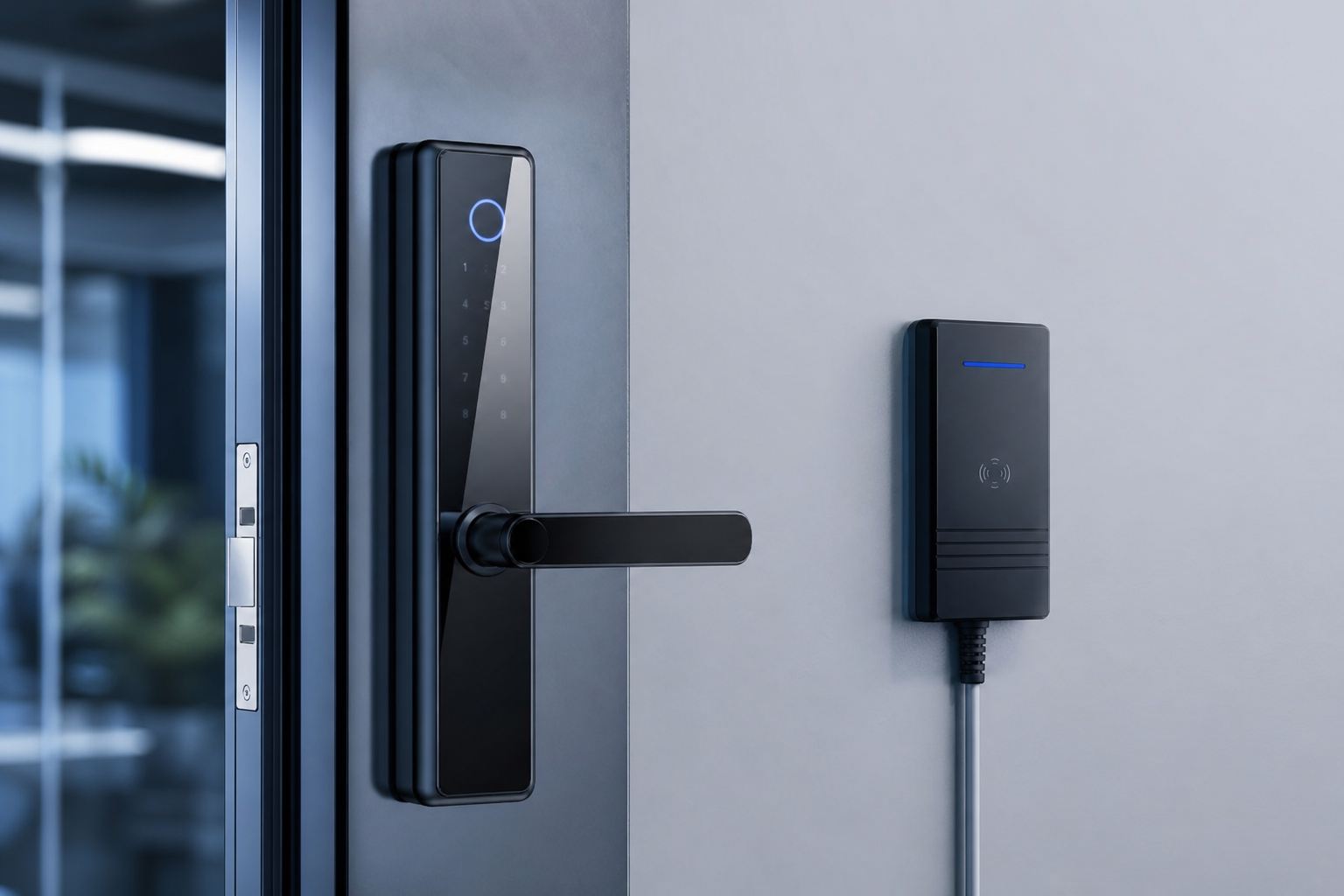
Wired access control is the better choice when you need maximum reliability and continuous power on high-traffic or critical doors, while wireless access control wins when you want lower installation cost and minimal disruption in finished or hard-to-cable buildings. Most UAE facilities ultimately use a blend of both.
This article breaks down the real differences in cost, reliability, security and scalability so you can specify the right mix for your property.
How each approach works
The decision is really about how each door connects back to the system.
- Wired access control runs cabling from each door's reader and lock to a central controller, which is powered from the mains. Data and often power travel over that cable.
- Wireless access control uses battery-powered locks or readers that communicate over an encrypted radio link to a nearby gateway, which connects to the network.
Both can be managed from the same software, issue the same credentials and produce the same audit logs. The difference is in the physical infrastructure behind the door.
Side-by-side comparison
| Factor | Wired | Wireless |
|---|---|---|
| Installation cost | Higher (cabling, labour) | Lower (minimal cabling) |
| Installation disruption | Significant in finished spaces | Minimal |
| Power | Continuous mains/PoE | Battery, needs replacement |
| Reliability | Very high | High, depends on signal and batteries |
| Scalability | Plan cabling ahead | Add doors quickly |
| Best for | Critical, high-traffic doors | Internal offices, retrofits |
Wired access control: pros and cons
Pros
- Continuous power means no batteries to monitor or replace, ideal for doors that must never fail.
- Proven reliability with no dependence on radio signal quality.
- Lower long-term running cost once installed, since maintenance is minimal.
- Strong fit for critical infrastructure such as server rooms, main entrances and turnstiles.
Cons
- Higher upfront cost driven by cabling and labour, especially in occupied buildings.
- Disruptive to install where ceilings, walls or finishes must be opened up.
- Less flexible if door locations change, as new cable runs are needed.
Wired remains the default for the doors you cannot afford to lose, and it pairs naturally with structured cabling work covered under our services.
Wireless access control: pros and cons
Pros
- Fast, low-disruption installation, often without opening walls or ceilings.
- Lower installation cost, particularly attractive in fit-outs and retrofits.
- Easy to expand, so you can add or relocate doors as needs change.
- Ideal for heritage or finished spaces where cabling is impractical.
Cons
- Battery maintenance is an ongoing task; high-traffic doors drain batteries faster.
- Signal dependency means thick walls or interference can affect reliability if gateways are poorly placed.
- Long-term cost can rise with battery replacement across many doors.
Cost over time, not just day one
A common mistake is comparing only the installation quote. Think in total cost of ownership:
- Installation — wireless usually wins here, sometimes dramatically in finished buildings.
- Running cost — wired wins, with no batteries and minimal upkeep.
- Expansion — wireless is cheaper to add doors; wired is cheaper if cabling was planned from the start.
- Lifespan — both can serve for many years when specified well.
For a new build where you control the cabling, wired often makes sense on most doors. For a retrofit in an occupied Dubai office tower, wireless can deliver the same security with a fraction of the disruption.
Choosing for UAE buildings
A few local considerations shape the decision:
- Building stage — New developments can budget cabling early; existing buildings favour wireless to avoid downtime.
- Compliance — Where your system links to monitored CCTV or alarms, check current SIRA requirements and ensure your integrator is appropriately licensed.
- Climate and traffic — High footfall in retail and hospitality drains wireless batteries faster, nudging busy doors toward wired.
- Future plans — If layouts will change, wireless flexibility is worth a premium.
The practical answer: blend both
Most well-designed systems are hybrid. Use wired controllers on perimeter, critical and high-traffic doors, then wireless locks on internal offices, stores and meeting rooms. One software platform manages everything, so users and reporting stay unified. You can see this approach in action across our projects.
Getting it right
The cleanest way to decide is a site survey that maps door traffic, existing cabling and your security zones, then assigns each door to wired or wireless on its own merits rather than a blanket policy.
Want help deciding the right mix for your building? Contact our team for a survey and a transparent, per-door recommendation.
Frequently asked questions
Is wireless access control as secure as wired?+
Yes, when implemented correctly. Reputable wireless locks use encrypted communication between the lock and the gateway, so security depends on the system's encryption and configuration rather than the cabling itself. Wired systems remain easier to power continuously.
Is wireless access control cheaper than wired?+
Wireless usually has lower installation costs because it avoids extensive cabling, which is valuable in finished or heritage buildings. Wired systems can cost less over the long term thanks to mains power and no battery replacement.
Do wireless locks need batteries?+
Most do. Wireless locks typically run on batteries that last months to a couple of years depending on traffic, after which they need replacing. Wired locks draw power from the network or a dedicated supply, removing battery maintenance.
Can I mix wired and wireless access control?+
Yes, and most UAE facilities do. A common approach is wired controllers on high-traffic perimeter and critical doors, with wireless locks on internal offices and stores, all managed from one software platform.