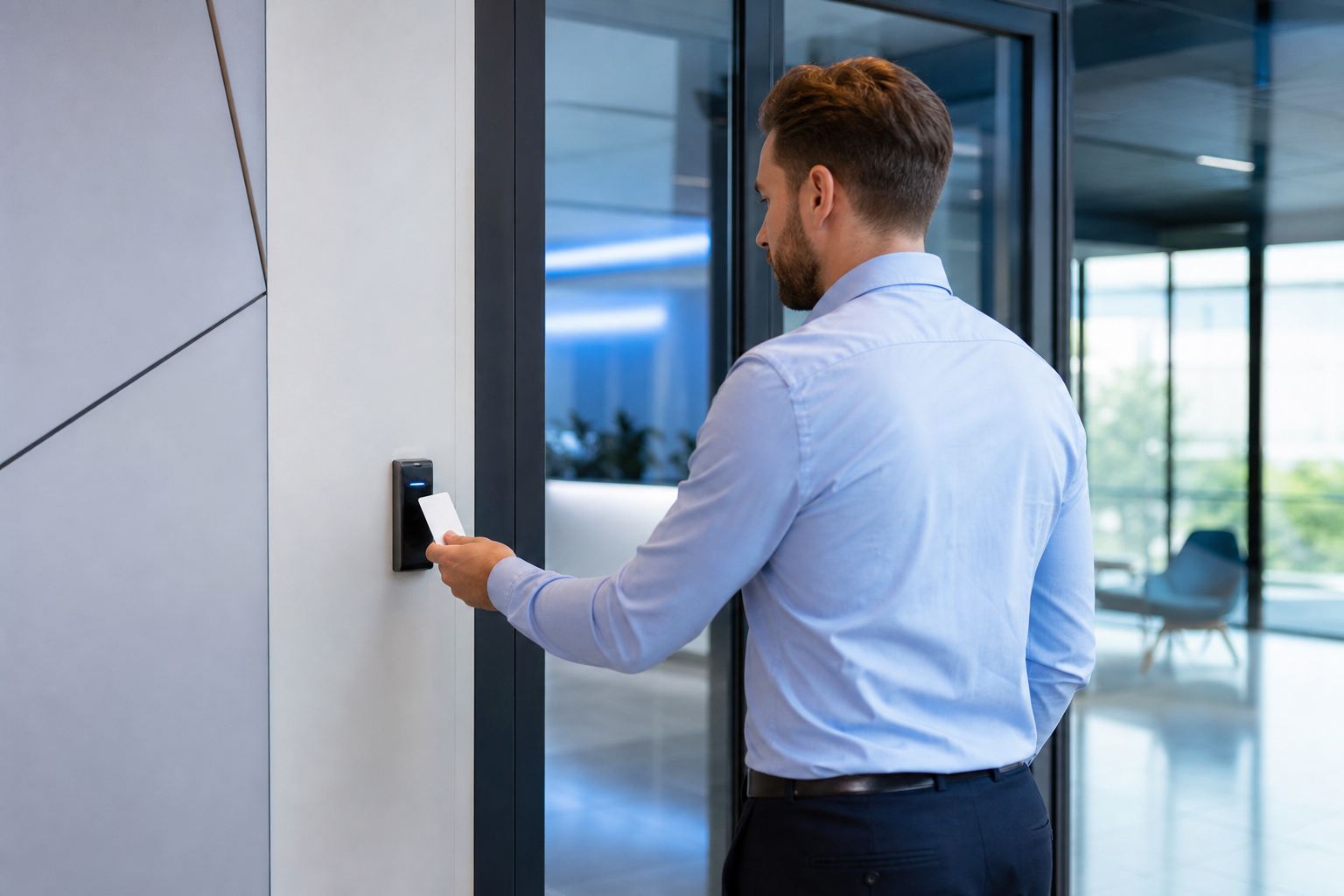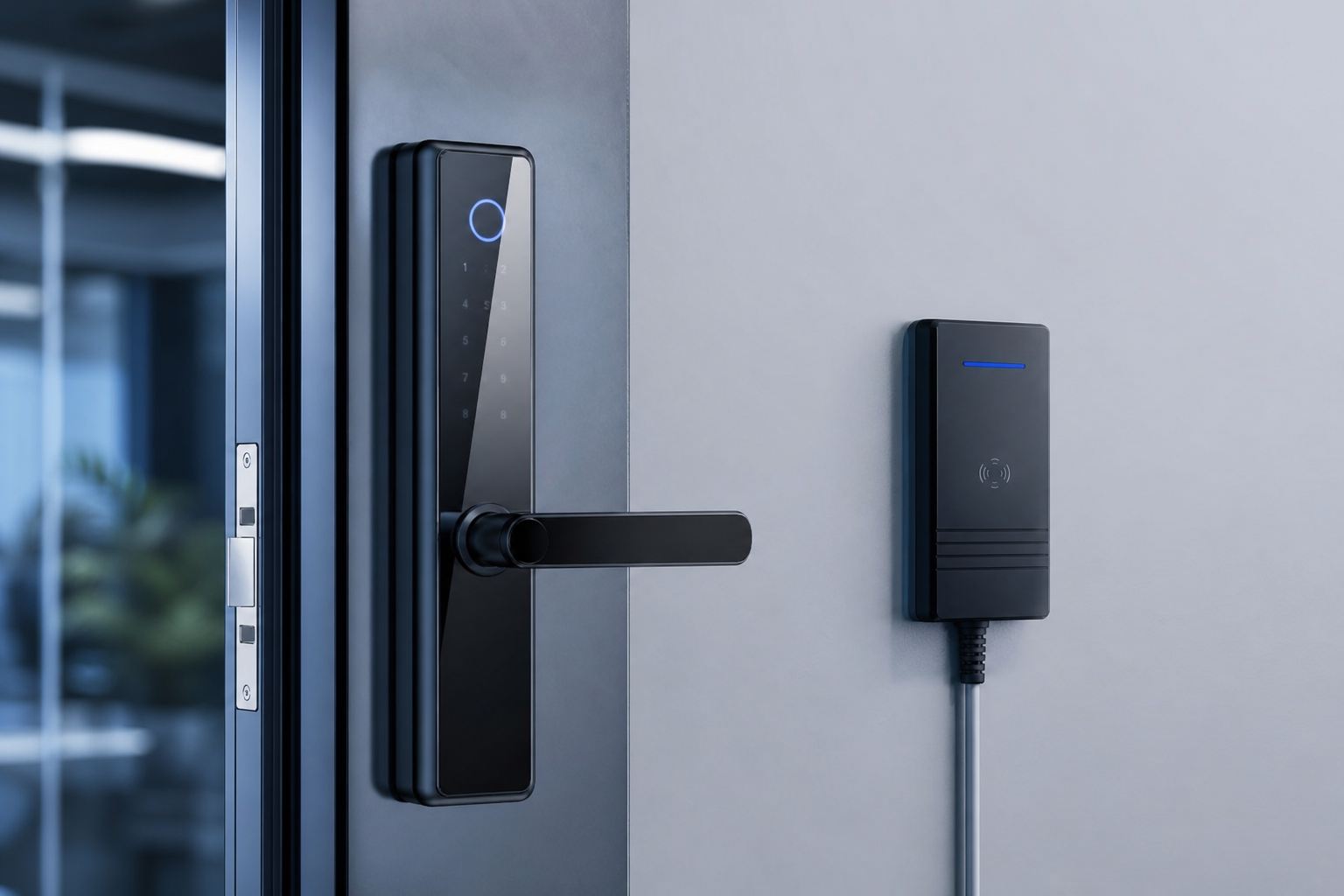
Biometric Access Control: Is It Right for Your Building?
Should you use biometric access control? Compare fingerprint, face and palm recognition, weigh accuracy, privacy and cost for UAE buildings before you buy.
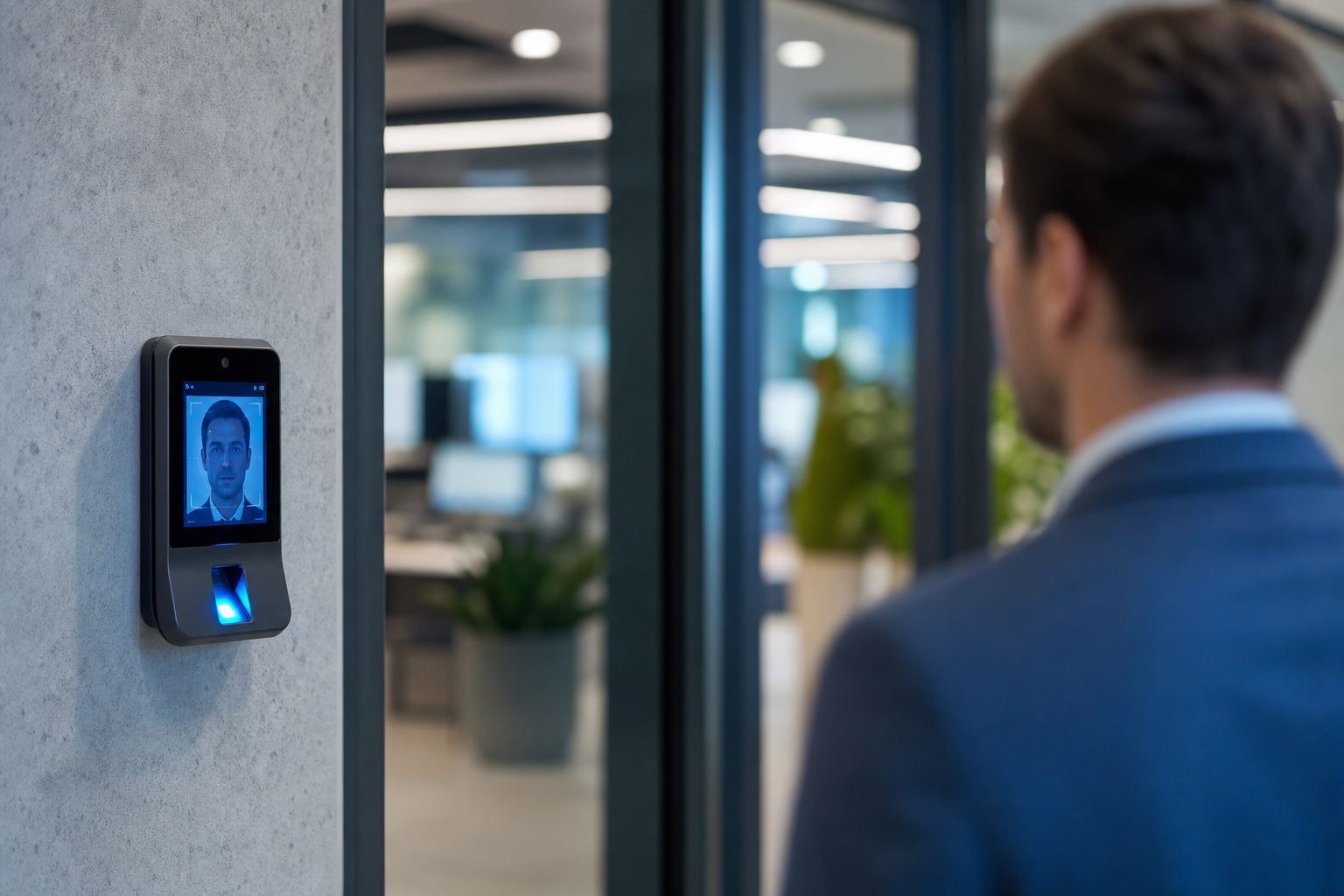
Biometric access control is the right choice when you need the highest level of accountability and want to eliminate shared or lost credentials, particularly for sensitive areas such as data centres, labs, cash rooms and executive floors. For low-risk doors with very high footfall, cards or mobile credentials are often the more practical fit.
This guide helps facilities managers and business owners in the UAE decide whether biometrics belong in their building, and which type to choose.
What biometric access control is
Biometric access control identifies people by a unique physical characteristic rather than something they carry or remember. The reader captures a trait, converts it into an encrypted mathematical template and compares it against enrolled users. If it matches and the rules allow, the door opens.
The key advantage is simple: the credential is the person. It cannot be handed to a colleague, lost in a taxi or cloned like an old proximity card.
The main types compared
| Type | Speed | Hygiene | Best for |
|---|---|---|---|
| Fingerprint | Fast | Contact-based | Offices, back-of-house, cost-sensitive sites |
| Face recognition | Very fast | Contactless | High-traffic lobbies, hands-free entry |
| Palm / vein | Fast | Contactless | High-security, hygiene-conscious areas |
| Iris | Fast | Contactless | Very high-security zones |
Fingerprint
The most established and affordable option. It works well in offices and back-of-house areas, though dust, moisture or worn prints can occasionally affect reads on lower-grade sensors.
Face recognition
Contactless and quick, making it popular for busy Dubai lobbies and hands-free entry. Performance depends on good camera placement and lighting, so design matters.
Palm and vein
These read patterns beneath the skin, are contactless and are hard to spoof, suiting hygiene-conscious and higher-security environments.
When biometrics make sense
Biometrics are a strong fit when:
- Accountability is critical — you need certainty about exactly who entered, such as in finance, pharma or data rooms.
- Credential sharing is a problem — staff "buddy-punch" or pass cards around.
- Lost cards are costly — frequent reissuing creates admin and security gaps.
- You want a frictionless experience — contactless face or palm entry feels premium in corporate and hospitality settings.
You can combine biometrics with cards in a single platform, using biometrics only where they add value. Explore the options through our services.
When to think twice
Biometrics are not always the answer. Consider alternatives when:
- Footfall is extremely high and even a one-second read creates queues; here, mobile or card "tap and go" may flow better.
- Privacy sensitivity is high and stakeholders are uneasy about storing biometric templates.
- Budget is tight across many low-risk doors, where cards deliver adequate security for less.
- Environmental conditions are harsh, such as very dusty or wet entry points that challenge certain sensors.
A practical pattern is to deploy cards or mobile credentials at the perimeter and reserve biometrics for the handful of doors that genuinely warrant them.
Privacy, data and UAE compliance
Because biometric data is sensitive personal information, how you handle it is as important as the hardware. Good practice includes:
- Store templates, not images — systems should convert traits into encrypted templates that cannot be reverse-engineered into a photo or print.
- Encrypt at rest and in transit between reader, controller and server.
- Obtain and document consent from enrolled users, with a clear purpose.
- Limit retention and remove templates when staff leave.
- Control admin access to enrolment and reporting functions.
Regulatory expectations can vary by building type and use. Treat any specifics as subject to change, check current SIRA and UAE data-protection guidance, and ensure your integrator is licensed and experienced with biometric deployments.
Accuracy and the two error types
Every biometric system balances two errors:
- False reject — a genuine user is denied, causing frustration.
- False accept — the wrong person is admitted, a security risk.
Quality readers, correct placement, good enrolment and sensible thresholds keep both low. For the most sensitive zones, pair biometrics with a second factor such as a card or PIN, so two independent checks must pass.
Cost considerations
Treat figures as estimates pending a survey. Biometric readers cost more per door than card readers, and enrolment takes staff time. Against that, weigh the savings from eliminating card reissuing, reduced credential sharing and stronger audit trails. For a small number of high-value doors, the return is usually clear; across dozens of low-risk doors, the maths often favours cards.
You can see how mixed credential strategies work in practice in our projects.
Making the decision
Ask three questions for each door: How damaging would unauthorised entry be? How often are credentials shared or lost here? And how heavy is the traffic? High consequence and sharing risk point to biometrics; very high traffic and low risk point to cards or mobile.
Not sure where biometrics fit in your building? Contact our team for a site survey and a clear, door-by-door recommendation that balances security, privacy and cost.
Frequently asked questions
What is biometric access control?+
Biometric access control grants entry based on a unique physical trait such as a fingerprint, face or palm, rather than a card or PIN. Because the credential is the person, it cannot be lost, shared or easily cloned, which raises both security and accountability.
Is biometric access control secure?+
Yes, it is among the most secure options because the credential cannot be passed to someone else. Security depends on the quality of the reader, how biometric data is stored and encrypted, and whether it is combined with a second factor for sensitive areas.
Is biometric data private and compliant in the UAE?+
Biometric data is sensitive personal information, so storage and consent matter. Encrypt templates, limit retention and document consent. Requirements can vary, so check current SIRA and data-protection guidance and work with a licensed integrator.
Is face recognition better than fingerprint?+
Neither is universally better. Face and palm readers are contactless and fast for high traffic, while fingerprint is cost-effective and well proven. The right choice depends on traffic, hygiene needs, lighting and budget.