Integrating Access Control with CCTV and Alarms
Learn how integrating access control with CCTV and alarms creates a unified security system for UAE buildings: benefits, how it works and design tips.
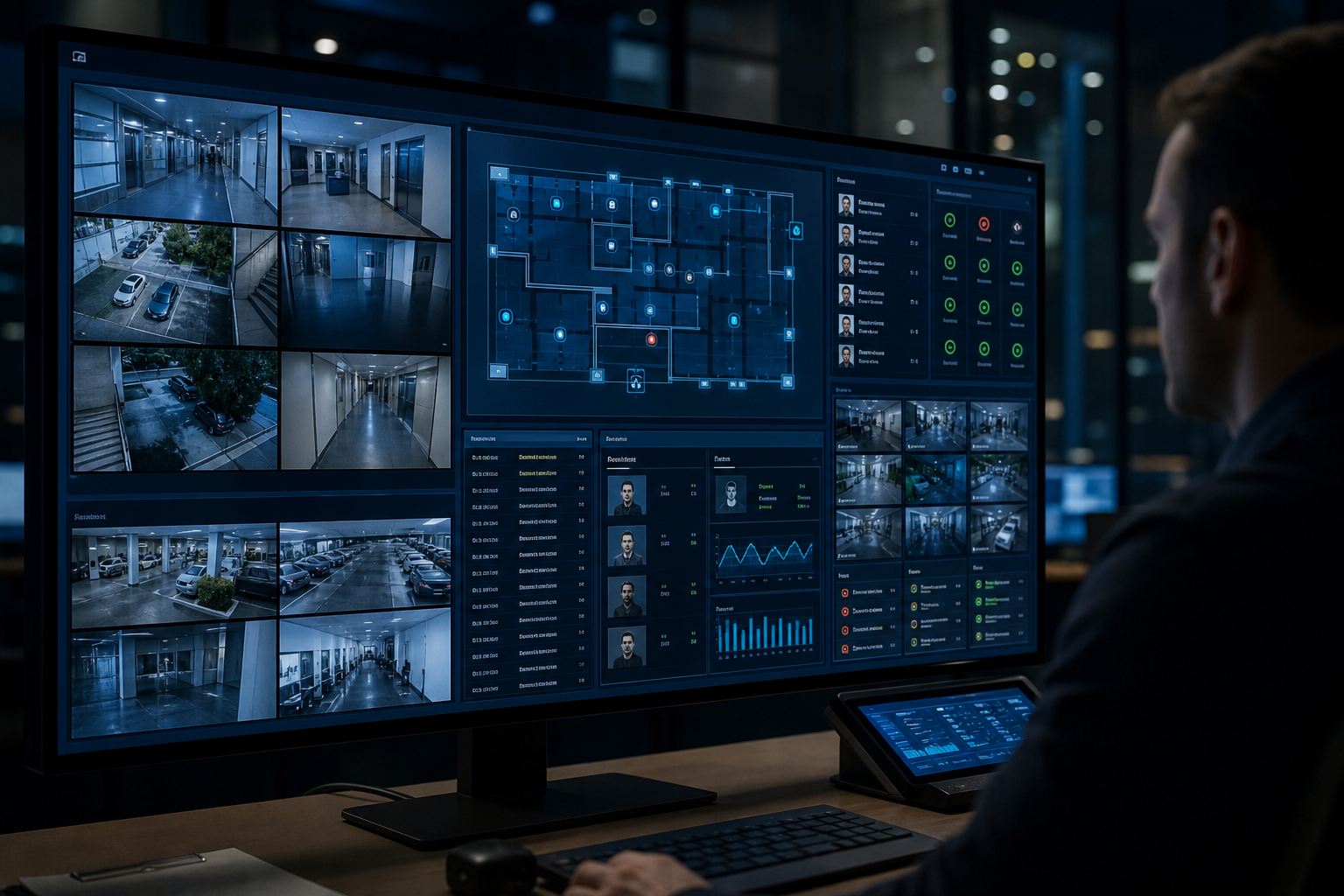
Integrating access control with CCTV and alarms turns three separate systems into one coordinated security platform, so a door event automatically links to the right camera footage and the correct alarm response. The result is faster investigations, fewer false alarms and a single operational view of your building.
Here is how integration works, what it delivers for UAE facilities and how to design it well.
What integration actually means
Standalone systems each do their job in isolation: access control logs a door opening, CCTV records video, and the alarm panel watches sensors. None of them talk to each other, so when something happens, your team has to manually piece events together across three interfaces.
Integration connects these systems so that an event in one triggers an intelligent response in the others. For example:
- A door forced open generates an alarm and instantly displays live and recorded video of that door.
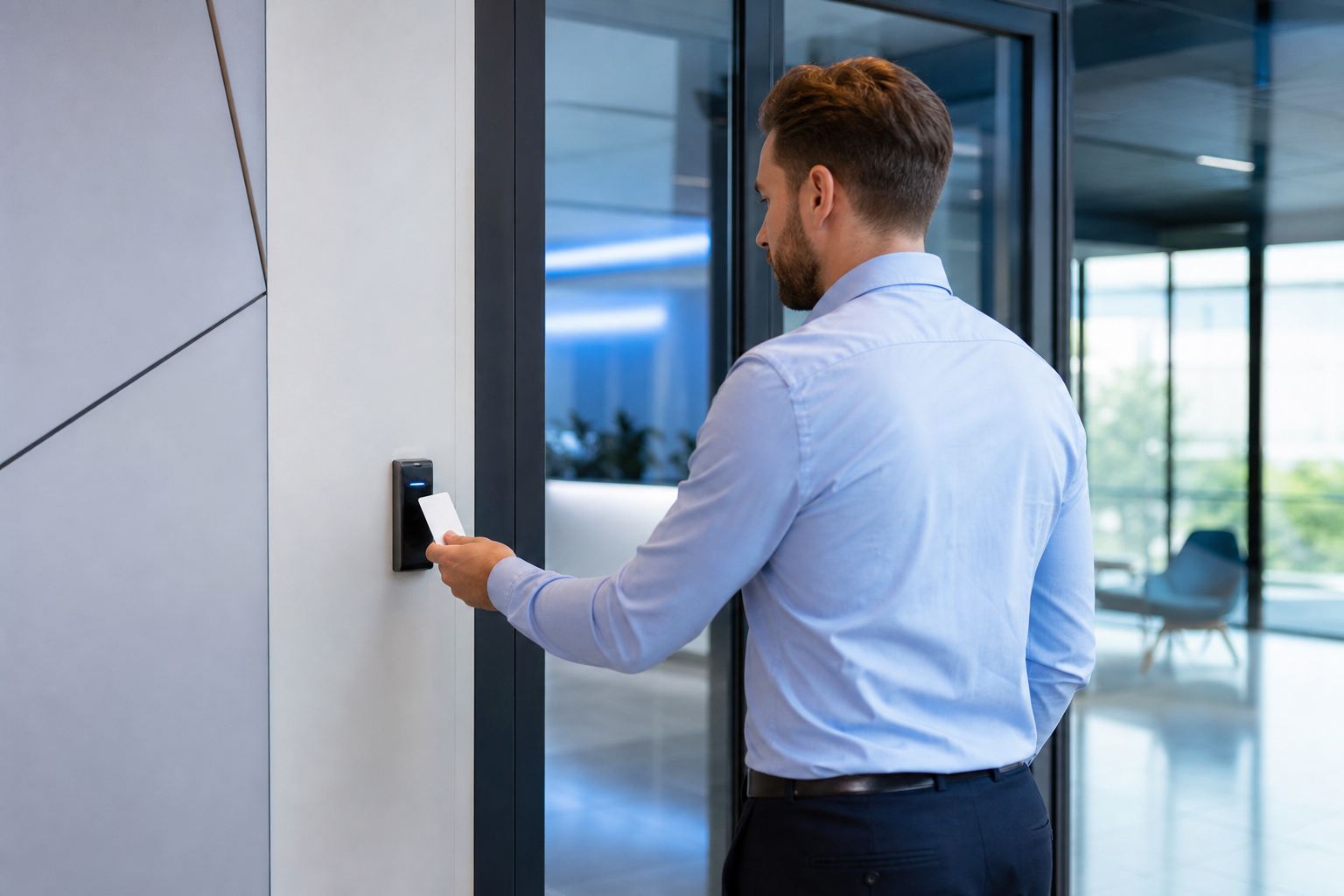
- A valid card swipe tags the corresponding video clip, so searching footage by person and door takes seconds.
- A fire alarm releases fail-safe doors for safe egress while alerting the control room.
The core benefits
Faster, evidence-rich investigations
Instead of scrubbing hours of footage, operators jump straight to the moment a specific credential was used at a specific door. Every access event becomes a bookmark in your video, which is invaluable for HR cases, insurance claims and incident reviews.
Fewer false alarms
When an alarm triggers, integrated CCTV lets operators verify visually before dispatching a response. This visual verification cuts costly false call-outs and helps teams prioritise genuine events.
Coordinated emergency response
On a fire signal, the system can unlock egress routes automatically. On a security breach, it can lock down a zone, hold lifts and surface the relevant cameras. This kind of choreography is extremely difficult with disconnected systems.
A single operational view
One platform for users, doors, cameras and alarms means less training, fewer mistakes and consistent reporting. Explore unified solutions through our services.
How integration is achieved
There are three common technical routes, and a good design often blends them.
| Method | How it works | Best when |
|---|---|---|
| Unified platform | One vendor's software manages all subsystems | New builds or full refurbishments |
| Open standards | Devices share a common protocol | Mixing compatible equipment |
| API / software bridge | Software links separate systems via integrations | Connecting existing investments |
The right route depends on what you already own. If you are starting fresh, a unified platform is the cleanest. If you have an existing CCTV investment, an API or standards-based bridge protects that spend while adding access and alarm coordination.
A typical integrated workflow
To make it concrete, here is how an integrated system handles common scenarios:
- Normal entry — A staff member taps a card; the door opens, the event is logged and the nearest camera tags the clip with their identity.
- Tailgating — A door held open too long raises an alert and pops up live video so an operator can check.
- Forced entry — A door forced without a valid credential triggers an alarm, locks adjacent zones if configured and shows cameras instantly.
- Fire alarm — Fail-safe doors release for egress, the control room is alerted and cameras monitor evacuation routes.
Designing integration for UAE buildings
A few local factors shape a successful project:
- Life-safety first — Egress and fire-alarm interfacing must comply with civil defence and building requirements. Free, safe exit always overrides security locking.
- Regulatory alignment — Where CCTV and monitored alarms are involved, check current SIRA requirements and engage a licensed integrator from the design stage.
- Network design — Integrated systems share a network, so plan bandwidth, segmentation and cybersecurity carefully.
- Scalability — Specify controllers and software that can grow with additional cameras, doors and buildings.
Avoid common pitfalls
The biggest mistakes are assuming any two brands will simply connect, and bolting integration on as an afterthought. Confirm compatibility during design, document every interface and test failure scenarios such as power loss and network outage before handover. You can review delivered integrated projects in our projects.
Is integration worth it?
For most commercial buildings, yes. The investigation time saved, the reduction in false alarms and the improved emergency response typically outweigh the additional design effort. Even modest integration, such as linking access events to camera footage, delivers a noticeable day-to-day improvement for security teams.
The key is to design it as one system from the outset rather than three systems forced together later.
Thinking about unifying your access control, CCTV and alarms? Contact our team for a site survey and an integration design tailored to your building, your existing equipment and your compliance needs.
Frequently asked questions
Why integrate access control with CCTV and alarms?+
Integration links door events to camera footage and alarm responses, so you see who triggered an event, not just that it happened. It speeds up investigations, reduces false alarms and gives operators a single, coordinated view of building security.
Can different brands of access control and CCTV work together?+
Often, yes. Integration is usually achieved through shared software platforms, open standards or APIs. Compatibility varies, so confirm it during design rather than assuming any two systems will connect out of the box.
Does integration improve emergency response?+
Significantly. On a fire alarm, integrated systems can release fail-safe doors for egress, while a forced-door event can lock down a zone and pull up live cameras for operators. This coordination is hard to achieve with separate systems.
Is an integrated system harder to maintain?+
Not necessarily. A well-designed integrated platform centralises management, so updates, user changes and reports happen in one place. The key is a clean design and a qualified integrator who documents the system properly.