IPTV and SMATV for Hotels and Residential Towers
IPTV vs SMATV explained for UAE hotels and residential towers: how each distributes TV, where they fit, cabling implications and how to choose the right system.
For most new UAE hotels and residential towers, IPTV is the more capable choice because it delivers live channels plus on-demand and interactive services over the building's IP network, while SMATV remains a robust, simpler option for distributing live channels over coaxial cabling. The right answer depends on the guest or resident experience you want and the cabling you already have.
How Each System Works
SMATV (Satellite Master Antenna Television)
SMATV takes signals from satellite dishes and terrestrial sources at a central head-end and distributes them as broadcast channels over a shared coaxial network to every outlet. Each TV tunes into the channels just as it would at home. It is mature, reliable and well understood.
IPTV (Internet Protocol Television)
IPTV converts channels and content into data streams delivered over structured cabling and the IP network. Each room receives content through a set-top box or a compatible smart TV. Because it is IP-based, IPTV can carry far more than live channels.
Why Hotels Increasingly Choose IPTV
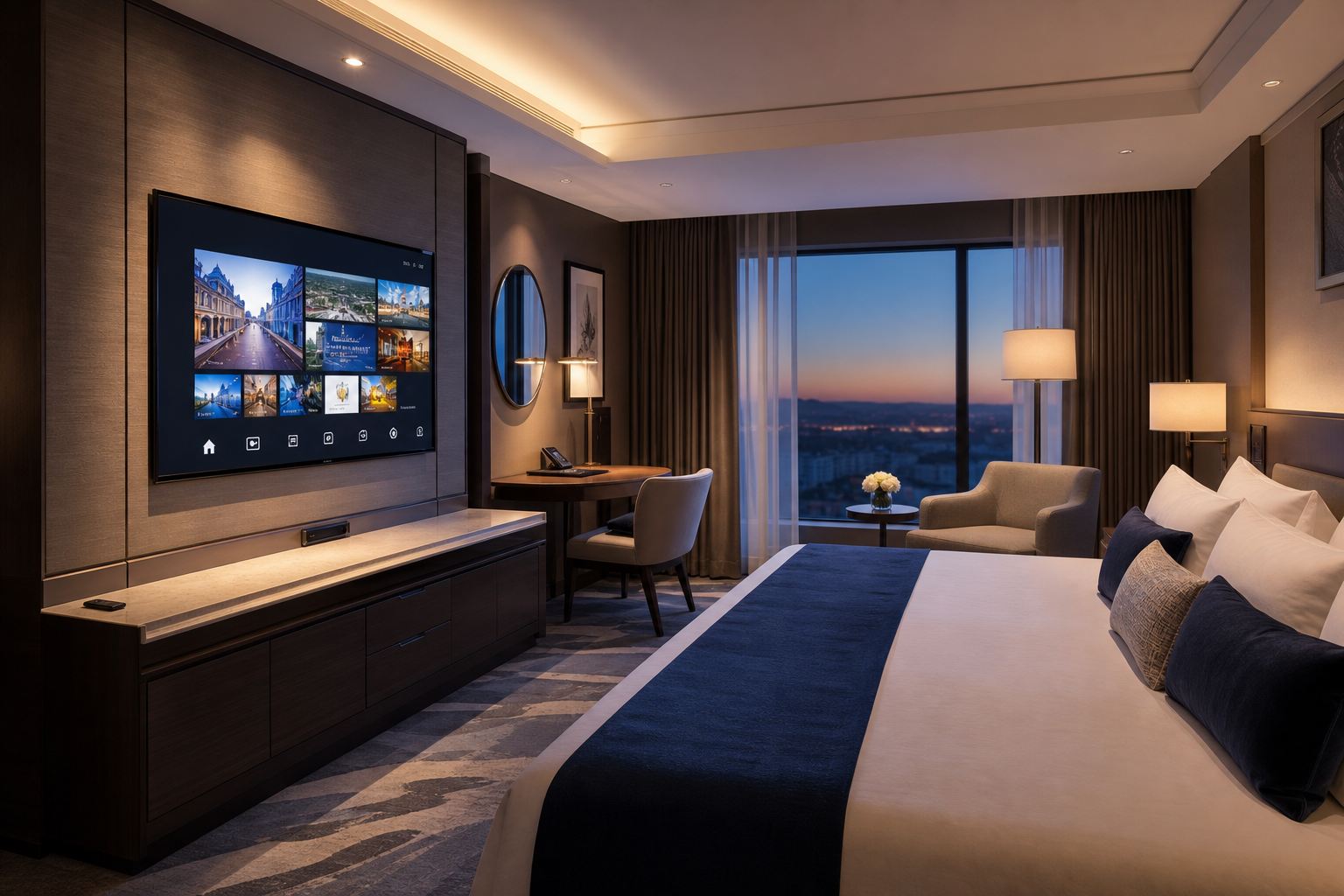
In hospitality, the in-room screen is part of the guest experience, not just a TV. IPTV typically enables:
- Branded welcome screens that greet guests by name.
- On-demand content and information about the property and services.
- Multilingual menus suited to Dubai's international guests.
- Service integration such as room billing, messaging and requests.
- Central management of every screen from one platform.
These features are difficult or impossible with broadcast-only SMATV, which is why full-service hotels usually specify IPTV, sometimes with an SMATV head-end feeding live channels into the IPTV platform.
Where SMATV Still Makes Sense
SMATV is not obsolete. It can be the right fit when:
- The property mainly needs reliable live channels with minimal interactivity.
- Budget or programme favours a simpler, proven distribution method.
- An existing coaxial infrastructure is in good condition.
Many projects use a hybrid approach, combining a strong SMATV head-end with IPTV distribution to get reliable channels and modern guest features together.
Comparing the Two
| Factor | SMATV | IPTV |
|---|---|---|
| Distribution | Coaxial | IP / structured cabling |
| Content type | Live channels | Live, on-demand, interactive |
| Guest features | Limited | Extensive |
| Integration | Minimal | Billing, PMS, messaging |
| Best fit | Simpler properties | Full-service hotels, modern towers |
Cabling and Infrastructure Implications
The cabling decision often drives everything else.
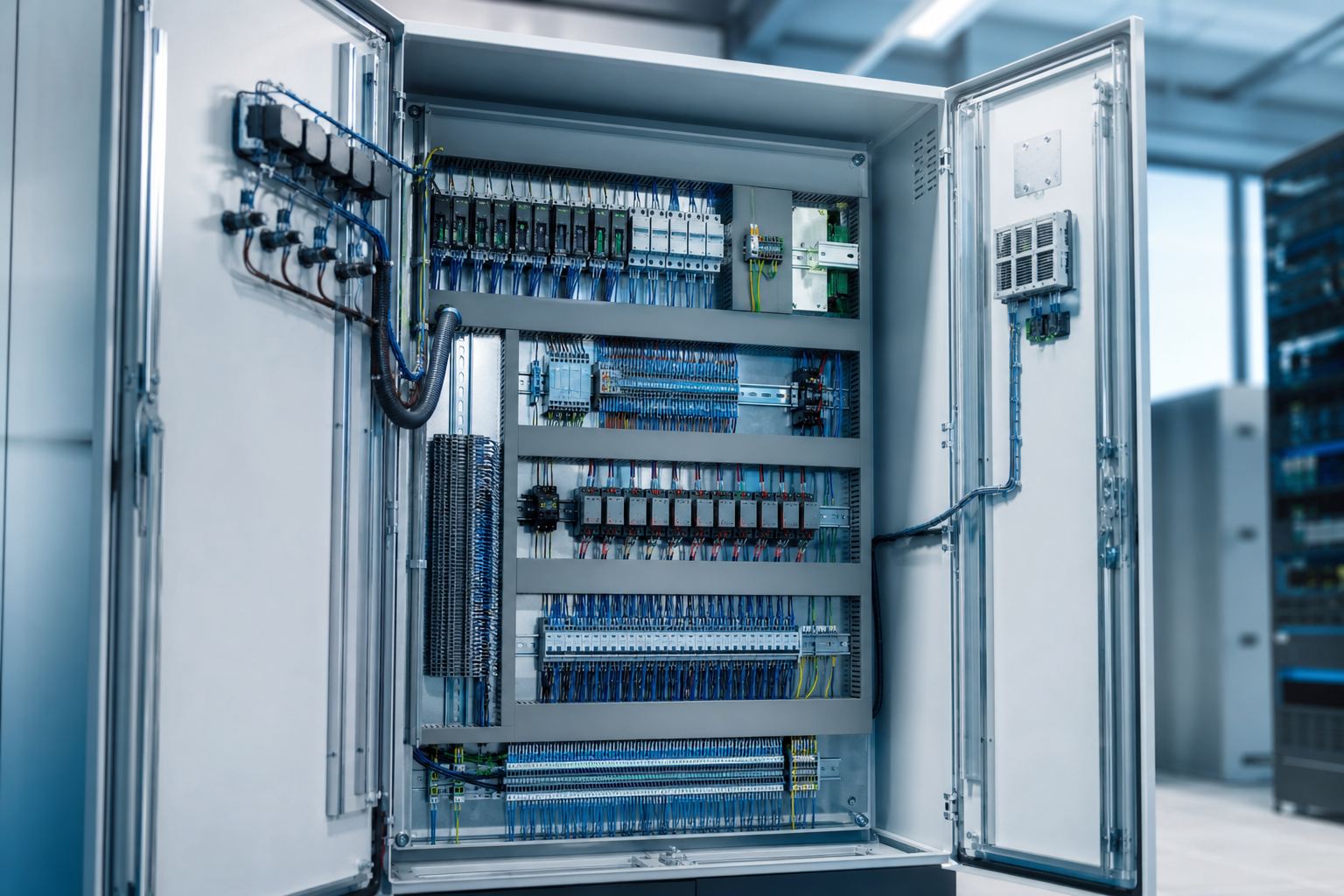
- SMATV needs a dedicated coaxial distribution network with appropriate splitters and amplifiers per floor and outlet.
- IPTV rides on structured cabling and the IP network, so it benefits from careful capacity planning and is frequently designed on a segregated or well-managed network so video quality is protected from other traffic.
For new towers, designing structured cabling with IPTV in mind from the start is far cheaper than retrofitting later. For existing buildings, a survey of risers, cabling and head-end space determines what is practical. These systems sit naturally alongside the structured cabling and network work covered in our services.
Planning a Successful Deployment
A few practical recommendations:
- Start with the experience. Define what guests or residents should see and do on screen, then choose the technology.
- Plan the head-end early. Allow space, power and cooling for the central equipment.
- Right-size the network. Capacity and resilience planning protects picture quality at peak times.
- Think about management. Decide who will update content, channels and screens, and choose a platform they can operate.
- Future-proof. Specify cabling and head-end capacity with growth in mind.
You can see examples of delivered building-services and AV projects through our projects.
Choose the Right System for Your Property
Whether you are fitting out a new hotel, upgrading a residential tower or weighing a hybrid IPTV and SMATV approach, the best system is the one that matches your guest experience, your cabling and your operating model. Contact our team for a site survey and a recommendation tailored to your building.
Frequently asked questions
What is the difference between IPTV and SMATV?+
SMATV distributes TV channels as broadcast signals over a shared coaxial network to every outlet, while IPTV delivers channels and on-demand content as data streams over the building's IP network. SMATV is simpler and channel-focused; IPTV adds interactivity, on-demand content and integration with other systems.
Which is better for a hotel, IPTV or SMATV?+
Most modern hotels choose IPTV because it supports guest-facing features such as welcome screens, on-demand content, billing integration and multilingual menus. SMATV can still suit simpler properties or be combined with IPTV where a reliable live-channel headend is needed.
Does IPTV need separate cabling from the internet?+
IPTV runs over structured cabling and the IP network, so it shares the same cabling type as data, but it is usually designed on a properly capacity-planned and often segregated network to protect video quality. SMATV uses a separate coaxial distribution network instead.
Can I add IPTV to an existing residential tower?+
Often yes, provided the building has, or can be upgraded to, structured cabling with enough capacity and suitable risers. A site survey of the existing cabling, risers and head-end space is the best way to confirm what is feasible before committing.