IP vs Analog (AHD) CCTV: Which Is Right for You in 2026
IP vs analog (AHD) CCTV compared for 2026: image quality, cabling, cost, scalability and which makes sense for Dubai businesses and existing installations.
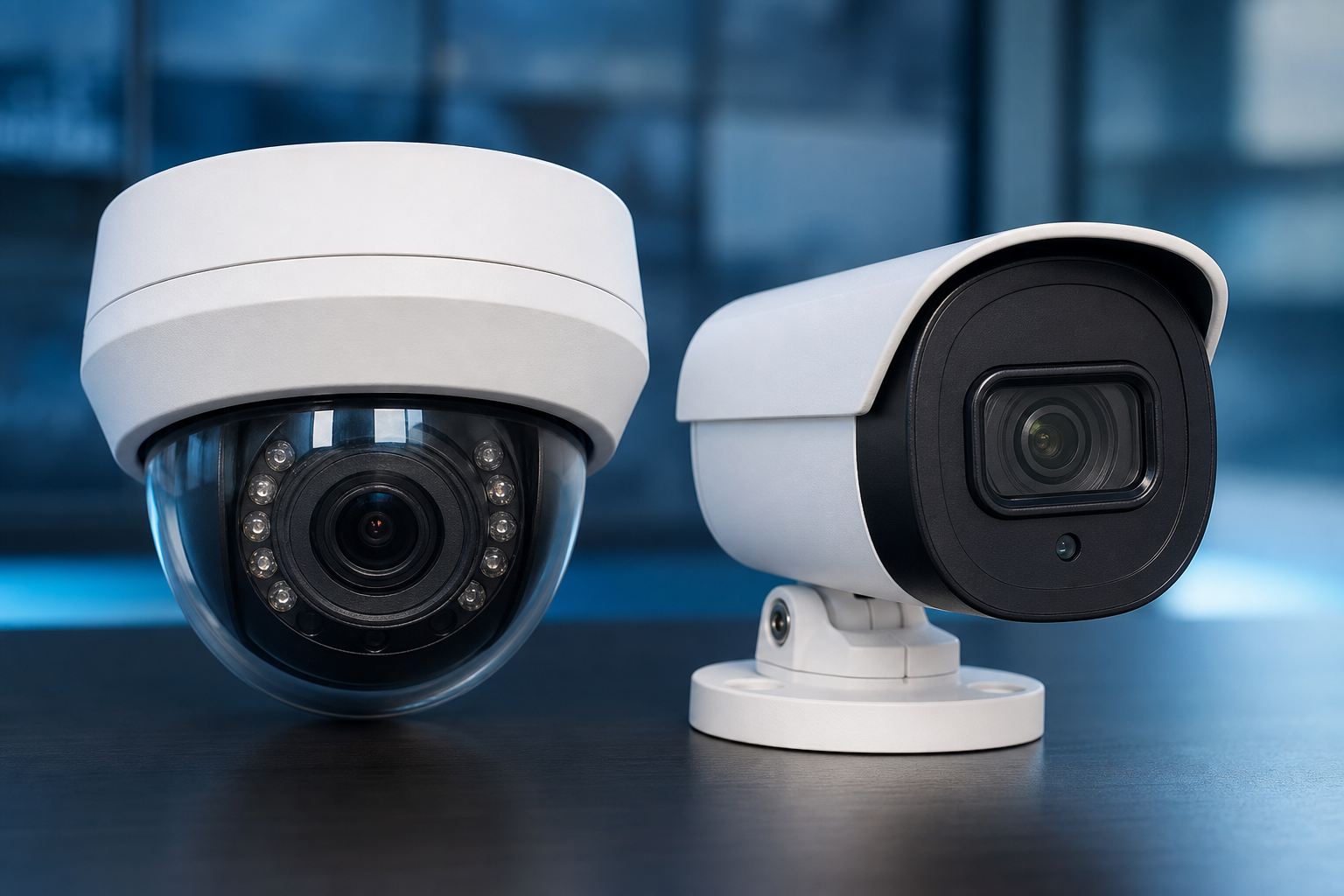
For most new installations in 2026, IP CCTV is the right choice thanks to higher resolution, built-in analytics and easy expansion over standard network cabling. Analog (AHD) still earns its place when you are reusing existing coaxial cable or working to a tight budget. The honest answer is that it depends on your building, your goals and what is already in the walls.
Below is a clear comparison to help facilities managers and business owners in Dubai decide.
The Core Difference
Analog systems, including modern AHD (Analog High Definition), send video as an analog signal over coaxial cable to a DVR. IP systems send digital video over network cabling to an NVR, with each camera acting as a networked device with its own IP address.
That single distinction drives almost every practical difference that follows.
Head-to-Head Comparison
| Factor | IP (network) | Analog / AHD |
|---|---|---|
| Resolution ceiling | Very high (8MP/4K and beyond) | Good HD, but more limited |
| Cabling | Network cable (often single-cable PoE) | Coaxial, plus separate power |
| Analytics | Advanced on-camera AI common | Basic, mostly recorder-side |
| Scalability | Add cameras to the network easily | Limited by DVR ports |
| Upfront cost | Higher | Lower, especially with existing coax |
| Best fit | New builds, growth, smart features | Retrofits, budget, existing coax |
Where IP Wins
IP is the stronger choice when you care about:
- Image detail. Higher resolutions make faces and plates readable, which matters for evidence.
- Smart analytics. Many IP cameras run on-board AI such as line crossing, intrusion detection, people counting and number-plate reading, reducing the noise from constant false alerts.
- Simpler cabling. Power over Ethernet (PoE) delivers data and power on one cable, which is cleaner to install and maintain.
- Growth. Adding cameras is largely a matter of adding network points, so the system grows with your premises.
For new builds, fit-outs and security-critical sites, these advantages usually outweigh the higher upfront cost. You can see the kinds of integrated deployments this enables in our projects.
Where Analog Still Makes Sense
Analog (AHD) remains a sensible, pragmatic option when:
- The building already has coaxial cabling you do not want to rip out
- The priority is keeping upfront cost low
- The requirement is straightforward visual coverage without heavy analytics
- You are extending or repairing an existing analog system
In many older Dubai buildings, pulling new network cable through finished ceilings and walls is disruptive and costly. In those cases, modern AHD over the existing coax can deliver a worthwhile image quality jump without a full re-cable.
The Hybrid Middle Path
You do not have to choose all or nothing. Hybrid recorders and video encoders let you keep working analog cameras while adding IP cameras where they matter most, then migrate over time. A typical phased approach:
- Keep the existing analog cameras running on a hybrid recorder.
- Add IP cameras at high-value points such as entrances, tills and gates.
- Replace ageing analog units with IP as budget allows.
This protects your earlier investment while moving you toward a modern, analytics-capable system.
Don't Forget Compliance and Storage
Whichever route you take, the system still has to meet Dubai expectations. Commercial premises are generally expected to align with SIRA standards and use a licensed installer, so confirm current SIRA requirements for your premises type. Higher-resolution IP footage also needs more storage, so size your NVR and any cloud backup to your required retention period rather than to a default.
So, Which Should You Choose?
- Building new, or want analytics and high resolution? Choose IP.
- Reusing coax, tight budget, simple coverage? Modern analog (AHD) is fine.
- Somewhere in between? Go hybrid and migrate gradually.
The best system is the one matched to your building and goals, not the one with the biggest spec sheet. If you would like an objective recommendation based on a survey of your site and existing cabling, contact our team and we will help you choose the right path for 2026 and beyond.
Frequently asked questions
Is IP CCTV better than analog in 2026?+
For new installations, IP CCTV is generally the better choice in 2026 because it offers higher resolution, smarter analytics and easier expansion over standard network cabling. Analog (AHD) still makes sense mainly when you are reusing existing coaxial cabling and want to keep costs down.
Can I upgrade my analog cameras to IP?+
Yes. You can migrate gradually using encoders or hybrid recorders that accept both analog and IP feeds, so you do not have to replace everything at once. This is a common, cost-effective path for older Dubai buildings with existing coax.
Does analog (AHD) CCTV still work over coaxial cable?+
Yes. Modern AHD analog cameras run over existing coaxial cabling and can deliver decent high-definition images, which is why they remain popular for retrofits where re-cabling would be disruptive or expensive.
Which is cheaper, IP or analog CCTV?+
Analog systems usually have a lower upfront hardware cost, especially when coax is already in place. IP systems can cost more initially but often deliver better long-term value through higher resolution, analytics and simpler scaling.