Intrusion Detection & Alarm Systems: A Beginner's Guide
A clear beginner's guide to intrusion detection and alarm systems for UAE businesses: sensors, control panels, monitoring, zoning and how to plan a reliable setup.
An intrusion detection and alarm system uses sensors to detect unauthorised entry and a central control panel to raise an alarm, alert people and, when monitored, summon a response. For a UAE business, a well-planned system protects your premises around the clock and works best when it is integrated with CCTV and access control rather than standing alone.
How the System Works
Every intrusion system, simple or advanced, follows the same basic flow: sensors detect, the panel decides, and the system responds.
The control panel
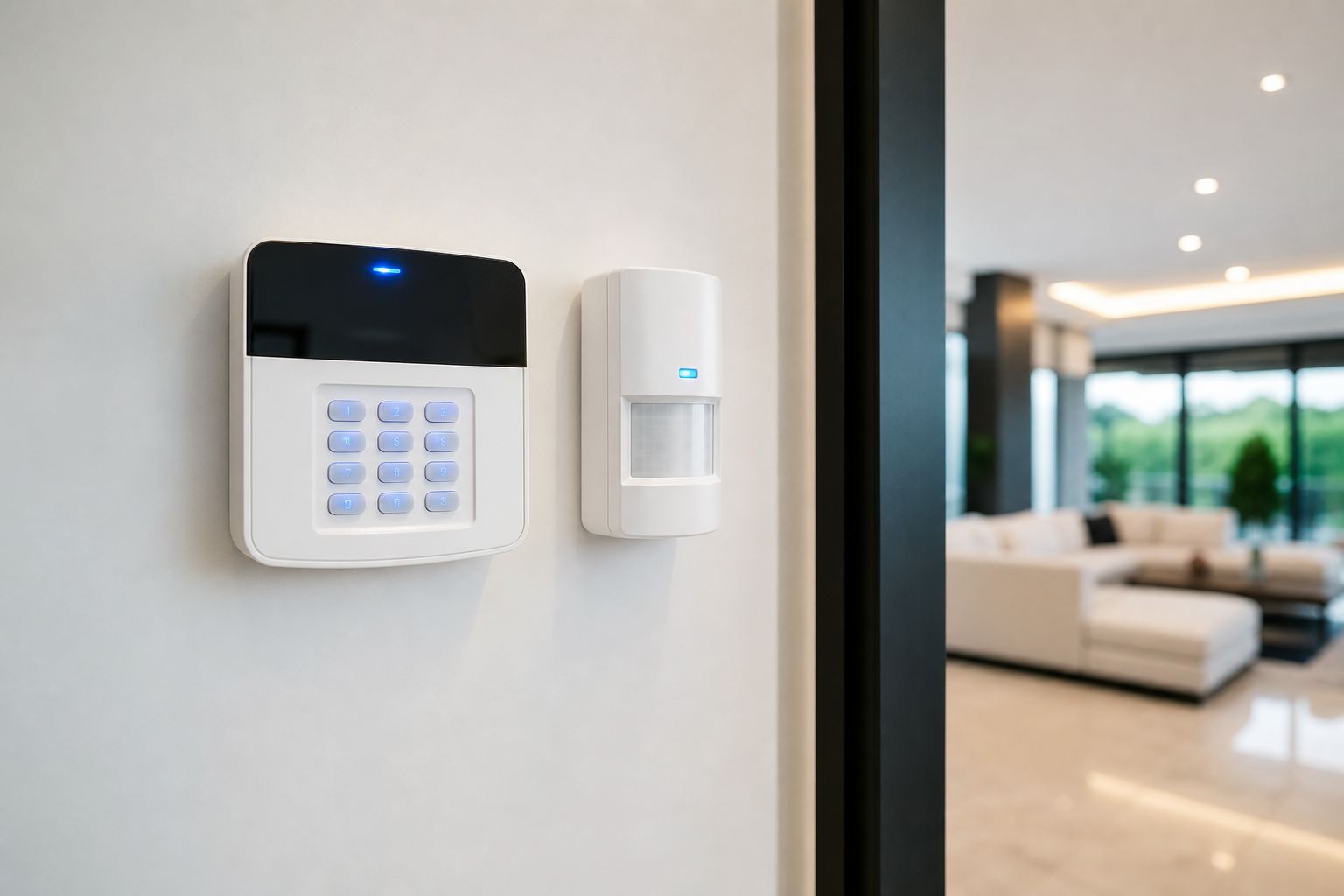
The control panel is the brain. It receives signals from every sensor, applies your settings (such as armed or disarmed), and triggers outputs like sirens, notifications or monitoring-centre alerts. Users typically arm and disarm via a keypad, fob or app.
The sensors
Sensors are the senses of the system. Common types include:
- Door and window contacts that detect opening.
- Motion detectors (PIR) that sense movement within a space.
- Glass-break detectors that hear the sound of breaking glass.
- Vibration or shock sensors for walls, safes or shutters.
- Beam detectors for perimeters and large openings.
The response
When triggered, the system can sound a siren, send notifications, and, if monitored, alert a monitoring centre or designated responders who can verify and act.
Monitored vs Unmonitored Alarms
A key early decision is whether the alarm simply makes noise or also calls for help.
| Type | What happens | Best for |
|---|---|---|
| Unmonitored | Siren and app alerts only | Smaller sites with people nearby |
| Monitored | Also alerts a monitoring centre or responders | Sites needing 24/7 response |
Monitored systems matter most for premises that are empty overnight or at weekends, where a siren alone may go unheard.
Designing the Right Coverage
Good design protects layers rather than scattering sensors randomly:
- Perimeter: doors, windows and other entry points.
- Entry routes: likely paths an intruder would take.
- High-value areas: stockrooms, cash areas, server rooms and offices.
A site survey identifies these layers and the right sensor mix, avoiding both gaps and unnecessary cost. The aim is to detect an intruder early, ideally at the perimeter, before they reach anything valuable.
Reducing False Alarms
False alarms waste time, erode trust in the system and can carry response costs. Sensible measures include:
- Choosing and placing sensors to avoid pets, draughts and signage movement.
- Using zoning so the system distinguishes between areas.
- Adding verification, such as cameras that confirm a real event.
- Maintaining the system so faults are caught early.
Verification through integrated CCTV is one of the most effective ways to cut false-alarm response.
Integrating With CCTV and Access Control
The biggest advantage of a modern system is integration. When intrusion detection, CCTV and access control work together:
- An alarm can trigger cameras to record and push live views to responders.
- Access events and alarms appear in one place for faster decisions.
- Verified alarms get a quicker, more confident response.
This unified approach is far more effective than three separate systems, and it is central to how we design security, covered in our services. You can see integrated installations through our projects.
Planning, Compliance and Maintenance
A few practical points round out a reliable setup:
- Plan power and backup so the system stays armed during outages.
- Keep it usable so staff arm and disarm it correctly every day; usability prevents human-error gaps.
- Document zones and users for clear management.
- Maintain regularly, testing sensors, batteries and communications.
- Check requirements, as commercial security in the UAE may involve specific approvals depending on the premises; confirm current requirements for your site.
A system that is easy to live with is a system that actually gets used, and that is what keeps a building protected.
Build a Security System That Fits Your Premises
Whether you are securing a single shop, an office or a larger facility, the right intrusion system starts with understanding your layout, risks and how your team works. Contact our team for a site survey and a clear, practical recommendation tailored to your premises and current UAE requirements.
Frequently asked questions
What is an intrusion detection system?+
An intrusion detection system uses sensors to detect unauthorised entry or movement and triggers an alarm through a central control panel. It combines door and window contacts, motion detectors and other sensors so a break-in is detected quickly and a response can follow.
What is the difference between an alarm and a monitored alarm?+
A basic alarm sounds a siren and may send a notification, relying on people nearby to respond. A monitored alarm also reports to a monitoring centre or designated responders, so action can be taken even when no one is on site to hear it.
How many sensors does my business need?+
It depends on your layout, entry points and risk areas rather than a fixed number. A good design protects the perimeter, key entry points and high-value internal areas, which a site survey will identify accurately for your premises.
Can intrusion alarms integrate with CCTV and access control?+
Yes. Modern systems commonly integrate so that an alarm can trigger cameras to record, send live views to responders and link with access control. This integration makes verification faster and reduces false-alarm response costs.